MENA | Starting a Forex Brokerage
What Forex Brokers Need to Know Before Expanding into the Middle East and North Africa
Finding qualified leads and recruiting new Forex traders is the foundation of growth for any brokerage. While competition is intense in established markets like Europe and North America, many brokers are now looking abroad for new opportunities. One increasingly attractive option is setting up your Forex broker in the Middle East and North Africa (MENA).
In previous posts, we’ve explored the software and infrastructure required to expand into new regions. In this article-and in the weeks ahead—we’ll focus on specific regional considerations that can determine success or failure.
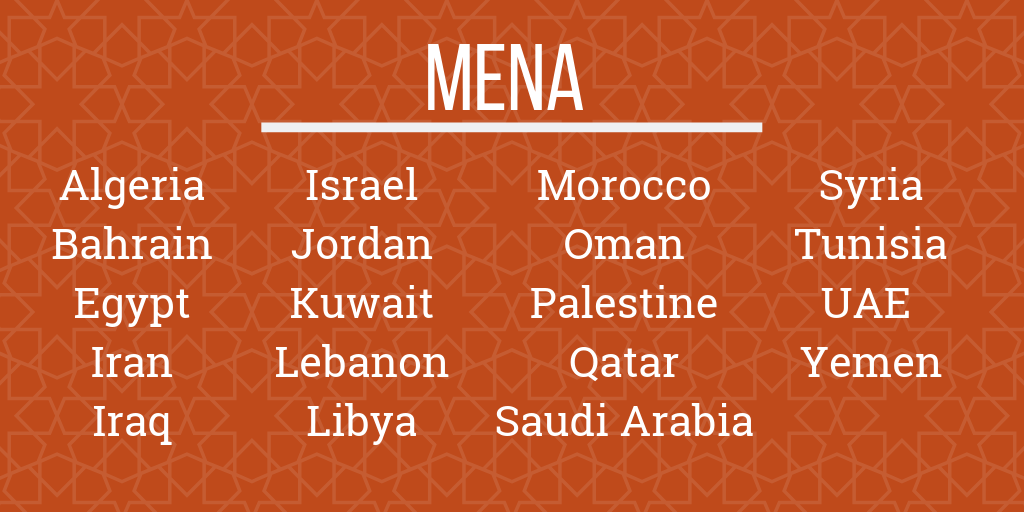
This week’s spotlight is on the MENA region, which stretches from Morocco on the northwest coast of Africa to Iran on the eastern edge of the Persian Gulf. Over the last decade, the region has emerged as a high-potential market for forex trading, especially as tighter regulations introduced by ESMA have reduced leverage and profitability for brokers operating in the European Union.
For firms looking to become a forex broker in the Middle East, understanding cultural norms, religious finance principles, regulatory structures, and marketing constraints is essential.
Why the MENA Region Is Attractive for Forex Brokers
The MENA region offers several advantages for forex brokers:
A young, tech-savvy population with high smartphone and internet penetration
Strong interest in trading, commodities, and alternative investments
High average disposable income in Gulf Cooperation Council (GCC) countries
Fewer region-wide regulatory restrictions compared to the EU
Despite its diversity, traders across MENA tend to look for similar qualities in a broker: trust, transparency, regulatory credibility, and compliance with Islamic finance principles.
Religious Considerations When Working With Forex Clients in MENA
One of the most important differences when operating as a forex broker in the Middle East is the role of Islamic finance. Sharia law governs many aspects of financial activity for Muslim investors, and ignoring these principles can significantly limit your addressable market.
Interest (Riba) and Swap-Free Accounts
Sharia law prohibits riba, or the charging and paying of interest. This restriction directly affects traditional forex trading, where overnight positions typically incur swap or rollover interest.
To address this, Islamic traders seek swap-free (Islamic) accounts, which remove interest charges. Instead of swaps, brokers usually apply:
A fixed overnight fee
An administrative fee per lot
A time-based holding fee
Offering transparent, clearly explained swap-free accounts is a baseline requirement for any forex broker targeting Muslim traders.
Asset-Backed Transactions and Market Legitimacy
Islamic law also discourages speculative transactions where no real exchange of value occurs. As a result, some scholars question whether certain spot forex transactions are permissible—even when they are swap-free.
To build trust, brokers should clearly explain:
How trades are executed
Whether positions are hedged or routed to liquidity providers
How forex trading contributes to real market activity
Some brokers also expand their offering to include commodities trading, which is often viewed more favorably by Muslim investors due to its tangible, asset-backed nature.
Islamic Finance Licensing and Sharia Compliance
Demonstrating Sharia compliance is not just a legal issue-it’s a marketing and credibility advantage. Traders often actively search for brokers that have been reviewed and approved by recognized Islamic authorities.
Sharia Supervisory Boards (SSBs)
A Sharia Supervisory Board (SSB) consists of Islamic scholars and economists who review financial products and issue a fatwa confirming whether those products comply with Sharia law.
For a forex broker in the Middle East, SSB approval can:
Increase trader trust and conversion rates
Differentiate your brand from competitors
Enable access to Islamic-specific licenses in certain jurisdictions
While setting up an internal SSB can be costly and complex due to the limited number of qualified scholars, it is often a worthwhile long-term investment.
Alternatives to Full SSB Licensing
If your brokerage is new or operating with limited capital, there are still ways to demonstrate Sharia compliance:
Adhere to standards set by the Accounting and Auditing Organization for Islamic Financial Institutions (AAOIFI)
Hire an AAOIFI-approved advisor to audit your products
Obtain a Sharia Quality Rating from the Islamic International Rating Agency
Regardless of the path you choose, your sales and support teams should be trained in basic Islamic finance principles so they can confidently answer client questions.
Government Regulation in the Middle East and North Africa
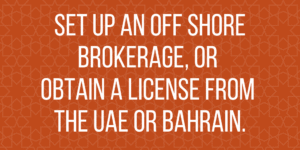
Although some brokers operate cross-border without local licenses, obtaining regulatory approval in MENA can significantly enhance your reputation and growth potential.
Dubai Financial Services Authority (DFSA)
The DFSA regulates financial services in the Dubai International Financial Centre (DIFC), one of the world’s leading financial hubs. A DFSA license:
Signals strong regulatory credibility
Appeals to high-net-worth and institutional traders
Supports expansion across the GCC and beyond
For many firms, a DIFC license is the gold standard when becoming a forex broker in the Middle East.
Central Bank of Bahrain (CBB)
Bahrain is a global center for Islamic finance. The Central Bank of Bahrain (CBB) offers specialized licenses for Sharia-compliant investment firms.
A CBB license can:
Strengthen your Islamic finance positioning
Simplify expansion into other Muslim-majority markets
Appeal to traders seeking fully Islamic brokerage models
Marketing a Forex Brokerage in MENA
Marketing strategies in MENA are broadly similar to those used in Europe or the U.S., but there are a few key differences.
SEO and Organic Traffic
Google is the dominant search engine across the region. However, Google Ads does not allow forex advertising in Middle Eastern or North African countries. This makes SEO especially important.
To attract organic traffic:
Publish educational content focused on Islamic forex trading
Optimize for keywords like forex broker in the Middle East
Create FAQ-style content to capture featured snippets and voice search
Language and Localization
While Arabic, French, and other languages are widely spoken, English is dominant in major financial centers such as Dubai. Many brokers successfully operate in English alone—but multilingual support can dramatically increase reach.
Effective approaches include:
Translating your website and trader’s room
Partnering with local IBs who speak regional languages
Using professional translators for compliance-sensitive content
Software Tools for Forex Brokers Operating in MENA
You don’t need region-specific software to operate in MENA, but your technology stack must support Islamic finance and IB-driven growth.
Key features to look for include:
Multi-level account management for IB and affiliate networks
Multilingual back office access for regional partners
Dividend and commodity management tools
Granular fee control to support swap-free account structures
These capabilities make it easier to scale while remaining compliant with Sharia principles.
Final Thoughts: Is the Middle East Right for Your Forex Brokerage?
The Middle East and North Africa represent a significant source of untapped potential for forex brokers. With the right preparation, becoming a forex broker in the Middle East can help your firm:
Diversify revenue streams
Reduce reliance on heavily regulated EU markets
Build a strong presence in high-growth economies
By understanding Islamic finance, securing appropriate licensing, investing in SEO-driven marketing, and deploying flexible software tools, your brokerage can position itself for long-term success in the MENA region.
Forex