
Back Office Software and MiFID II Compliance – Part 2

Introduction
The European Securities and Markets Authority (ESMA) introduced MiFID II to standardize investment practices across the European Union and strengthen investor protection. While these regulations create a safer and more transparent trading environment, they also introduce additional operational complexity for brokers-especially when it comes to managing third-party relationships.
In Part I, we explored how forex CRM software helps brokers handle client risk disclosures and suitability assessments. In this second part, we turn our attention to Introducing Brokers (IBs)-a critical but often challenging component of many forex and CFD brokerage models.
As ESMA continues to refine its guidance, particularly through its Q&A on speculative products, it has become clear that regulators are paying closer attention to how brokers manage IB relationships. This makes having the right tools not just beneficial, but essential.
Why IB management is a compliance priority
Introducing Brokers play a key role in client acquisition and relationship management. However, because they operate as intermediaries, they can also introduce regulatory risk if not properly monitored.
MiFID II requires brokers to maintain full control and oversight of all client-facing activities-even those carried out by third parties. This is where forex CRM software becomes indispensable, allowing firms to enforce structure, transparency, and accountability across their IB networks.
Controlling IB activities
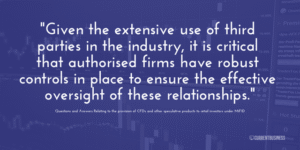
One of the key requirements highlighted in ESMA’s updated guidance is the need for “robust controls” over IB activity. Brokers must be able to demonstrate that they actively manage what IBs can and cannot do within their systems.
Role-based access and permissions
A powerful feature of modern forex CRM software is the ability to define user roles and assign granular permissions. This ensures that IBs have access only to the tools and data necessary for their role-nothing more, nothing less.
For example, an IB role might allow users to:
- View and manage their referred clients
- Track deposits and trading activity
- Request KYC documentation
- Monitor lead conversions
At the same time, restrictions can be applied to prevent IBs from:
- Approving KYC documents
- Activating or verifying accounts
- Accessing sensitive compliance data
This structured approach not only reduces operational risk but also demonstrates to regulators that your firm maintains strict internal controls.
Centralized monitoring through the client portal
When IBs operate through a centralized client portal powered by forex CRM software, every action they take is logged and traceable. This creates a transparent environment where brokers can:
- Monitor IB interactions with clients
- Review communication history
- Identify unusual or non-compliant behavior
By integrating the client portal with compliance systems, brokers gain real-time visibility into IB activities-something that is increasingly expected under MiFID II.
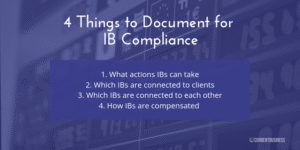
Documenting connections and relationships
Beyond controlling IB actions, brokers must also maintain detailed records of all IB-related relationships. This includes mapping connections between IBs and clients, as well as tracking any hierarchical or multi-level structures.
Multi-level partnership tracking
Many brokerages operate complex IB networks, where one IB may refer other IBs in addition to clients. Managing this manually is inefficient and prone to error.
With forex CRM software, brokers can:
- Map relationships between IBs and their clients
- Track multi-tier partnership structures
- Instantly access client ownership data
- Maintain real-time updates across the system
This level of visibility ensures that brokers can quickly respond to regulatory inquiries and demonstrate full transparency.
Managing IB compensation
Compensation is one of the most sensitive areas of IB management from a regulatory perspective. ESMA requires brokers to clearly document how IBs are paid and ensure that compensation structures do not create conflicts of interest.
Transparent fee structures
Using forex CRM software, brokers can implement and manage a wide range of compensation models, including:
- Revenue sharing
- CPA (cost per acquisition)
- Hybrid structures
More importantly, the system allows firms to fully document these arrangements, ensuring that all payments are traceable and compliant.
Real-time reporting and audit readiness
A strong system provides instant access to detailed financial data related to IB performance. Brokers can:
- Generate reports on IB earnings
- Track revenue by client or trading activity
- Download historical payment records
These capabilities make it easy to demonstrate compliance during audits and show regulators that your firm actively monitors IB compensation for irregularities.
The power of integration across your back office
While IB management is a critical function on its own, its true effectiveness comes from integration with the rest of your brokerage operations.
A fully connected forex CRM software ecosystem links IB management directly with:
Treasury
IB commissions and payouts are aligned with real-time financial data, ensuring accuracy and preventing discrepancies.
Compliance
All IB activities are cross-checked against KYC, AML, and client suitability data, reducing regulatory risk.
Bonuses
Promotions offered through IBs are tracked and controlled to ensure they meet regulatory standards.
Marketing
IB-driven campaigns can be monitored and optimized while ensuring messaging remains compliant.
This interconnected approach eliminates data silos and creates a unified system where every department works with the same reliable information.
Building trust with regulators
Regulators are increasingly focused on how brokers manage third-party relationships. Simply having IBs is not an issue-failing to control and document their activities is.
By leveraging forex CRM software, brokers can:
- Prove they have robust oversight mechanisms
- Maintain detailed and accessible records
- Respond quickly to regulatory requests
- Minimize the risk of compliance breaches
In a competitive and highly regulated market, these capabilities are not just operational advantages-they are essential for long-term success.
Final thoughts
Managing Introducing Brokers under MiFID II is a complex task, but the right technology, like the one we at CurrentDesk offer, makes it significantly more manageable. From enforcing role-based permissions to tracking multi-level partnerships and documenting compensation, forex CRM software provides the tools brokers need to stay compliant and efficient.
When combined with a fully integrated back office-connecting treasury, compliance, bonuses, and marketing-your brokerage gains a powerful foundation for growth, transparency, and regulatory confidence.
As regulations continue to evolve, staying informed and using the right systems will be key to maintaining your competitive edge.