Forex CRM vs Back Office: What’s the Difference and Do You Need Both? | CurrentDesk

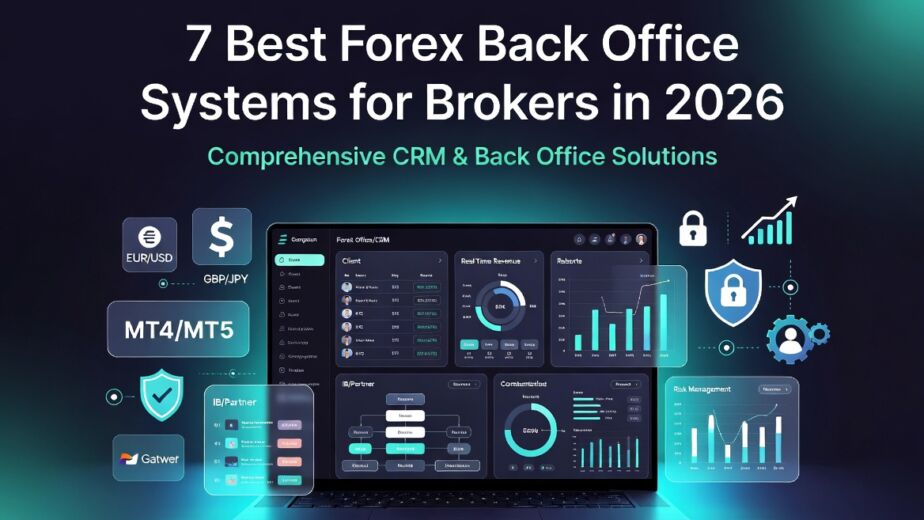
A Forex CRM and a Forex back office system are two distinct but closely related components of broker management software. The CRM handles the client-facing side of brokerage operations — leads, onboarding, sales, and partner relationships. The back office handles the operational and compliance layer — KYC processing, revenue tracking, treasury reconciliation, and regulatory reporting. Most brokerages need both, and the best forex broker software platforms include them in a single integrated system.
This guide explains the difference between a Forex CRM and a Forex back office system,, what each one does, and how they work together.
What is a Forex CRM?
A Forex CRM (Customer Relationship Management system) is the software that manages the relationship between a brokerage and its clients and partners. It is the primary tool used by sales teams, marketing teams, and support staff.
The core functions of a Forex CRM include:
- Lead management — capturing leads from registration forms, marketing campaigns, and referral links, and routing them to the right sales representatives
- Client profiles — maintaining a complete record of every client’s demographic information, account status, trading activity, and communication history
- Onboarding automation — guiding new clients through registration, KYC document submission, and account activation
- Email and campaign tools — sending targeted emails and tracking campaign performance by source, region, or trading behavior
- Partner and IB management — tracking referrals from introducing brokers and affiliates, managing multi-tier commission structures, and providing partners with their own portal
- Sales reporting — tracking conversion rates, lead sources, deposit activity, and team performance
What is a Forex Back Office System?
A Forex back office system is the operational infrastructure that runs behind the scenes of a brokerage — invisible to clients but essential to daily operations. It is the primary tool used by compliance officers, finance teams, and brokerage administrators.
The core functions of a Forex Back Office include:
- KYC and AML compliance — managing the collection, verification, and storage of client identity documents, with automated reminders for document expiry
- Revenue tracking — automatically calculating daily revenue from spreads, commissions, transaction fees, and swap charges across all connected trading platforms
- Treasury and transaction management — tracking all deposits, withdrawals, internal transfers, and currency conversions with full audit trails
- Trading platform integration — connecting to MetaTrader 4, MT5, and other platforms to pull real-time account and trade data
- Regulatory reporting — generating compliance reports for regulatory submissions and internal audits
- User roles and permissions — controlling which staff members can access or modify specific areas of the system
Forex CRM vs Forex Back Office System — key differences
| Feature | Forex CRM | Forex Back Office |
|---|---|---|
| Primary users | Sales, marketing, support teams | Compliance, finance, admin teams |
| Main focus | Client acquisition and retention | Operations and compliance |
| Lead management | Yes — core feature | No |
| KYC/AML compliance | Basic document collection | Full compliance workflows and reporting |
| Revenue tracking | Sales revenue and commissions | Full P&L from all trading platform sources |
| Client portal | Sometimes included | Sometimes included |
| Partner/IB management | Yes — referral tracking and commissions | Rebate calculations and payment processing |
| Trading platform sync | Account creation and basic sync | Full real-time data sync and reporting |
| Audit trails | Communication and activity logs | Full audit trail for all financial operations |
Do brokers need both a Forex CRM and a Forex Back Office System?
Yes — most brokerages need both. The CRM and back office serve different teams and different operational needs. Running a brokerage with only a CRM would leave you without the compliance, treasury, and revenue tracking infrastructure required to operate safely and at scale. Running only a back office without a CRM would mean managing leads, clients, and partners manually with no sales automation.
The practical question is whether to use two separate systems or a single integrated platform that includes both. There are trade-offs to each approach:
- Separate systems — allows best-of-breed selection for each function, but requires custom integration work, creates data silos, and increases operational complexity
- Integrated platform — all data flows automatically between CRM and Forex back office system, reducing manual work and errors, with a single vendor relationship and one dashboard for all teams
Most brokerages — especially those launching or scaling — benefit from an integrated platform where CRM and Forex back office system are part of the same system. The data consistency and operational simplicity outweigh the flexibility of using separate tools.
What about the Client Portal and Partner Management?
In addition to the CRM and back office, a complete forex broker software system typically includes two more components:
- Client Portal (Trader’s Room) — the branded interface where traders manage their accounts, deposit and withdraw funds, upload KYC documents, and monitor trading activity. It sits between the client and the back office.
- Partner Management — a dedicated portal for Introducing Brokers (IBs) and Asset Managers (AMs) where they can monitor their referrals, track commissions, and manage their client base independently.
Together, the CRM, Back Office, Client Portal, and Partner Management form the four pillars of a complete forex broker software platform.
How do Forex CRM and Back Office work together?
In an integrated system, the CRM and back office share a single database and exchange data automatically. Here is a typical workflow:
- A lead registers through a form on the broker’s website — the CRM captures the lead and assigns it to a sales representative
- The sales team contacts the lead and converts them to a client — the CRM creates the client profile
- The client submits KYC documents through the client portal — the back office receives and processes them
- Once approved, the back office activates the trading account on MT4 or MT5 automatically
- The client deposits funds — the back office records the transaction and updates the treasury
- The client trades — the back office pulls revenue data from the trading platform in real time
- If the client was referred by an IB — the back office calculates and records the commission automatically
In a disconnected system, each of these steps would require manual data entry across multiple platforms — creating delays, errors, and compliance risks.
CurrentDesk — Forex CRM and Forex Back Office System in One Platform
CurrentDesk is an all-in-one forex broker software platform that includes a fully integrated Forex CRM, Admin Back Office, Client Portal, and Partner Management system — all in one dashboard. There is no need to integrate separate tools or manage multiple vendor relationships.
CurrentDesk has been serving forex and OTC brokers since 2013, is ISO 27001:2022 certified, and integrates natively with MetaTrader 4, MT5, ShiftTrader, and over 600 payment providers. New brokerages can be operational within one business day. Request a free demo to see how CRM and back office work together in a single platform.

Ron
Ron S.
Executive Director & FinTech Founder
FinTech strategist and McGill alum with a dual background in AI/Computer Science and Finance. With 18+ years of experience—from leading global trading desks to founding CurrentDesk—I specialize in bridging the gap between complex algorithmic systems and global capital markets to drive institutional growth.