4 Tools to Make Your Forex Firm Scalable
What You Need to Scale FX Broker Operations
In the fast-paced world of foreign exchange (FX) trading, where currency values fluctuate in seconds and global events reshape markets overnight, learning how to scale FX broker operations isn’t just an ambition — it is a necessity for long-term profitability.
As a brokerage owner or executive, you navigate volatile financial markets, evolving regulatory frameworks, and shifting client demands. Geopolitical shifts might open doors to emerging markets in Asia or Latin America, while regulatory updates from bodies like the FCA or CySEC introduce strict compliance standards.
To capitalize on growth opportunities, your brokerage must be primed for scalability: onboarding clients rapidly, expanding into new geographic regions, and managing operational complexity without proportional spikes in headcount or downtime.
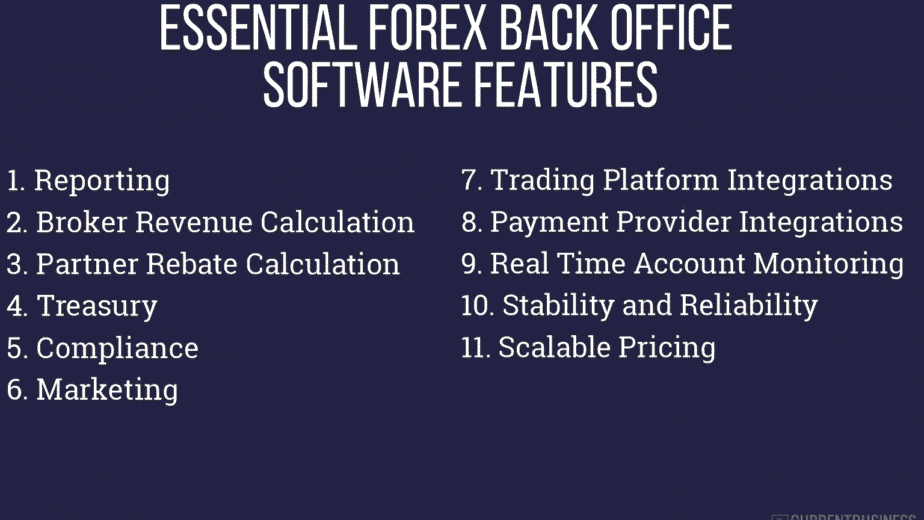
At the center of operational readiness is your forex back office software — a robust system handling client onboarding, trade reconciliation, regulatory reporting, and partner management. Without it, even promising growth prospects falter under administrative friction.
To successfully scale FX broker growth, your infrastructure relies on five core pillars: platform independence, partner management software, multilingual localized portals, flexible pricing structures, and cryptocurrency exchange integrations.
1. Platform Independence: Future-Proofing Your Technology
A primary requirement when preparing to scale FX broker technology is platform independence. Tying your operations to a single trading platform limits market agility. While MetaTrader 4 (MT4) remains widely adopted among retail traders, MetaTrader 5 (MT5) offers hedging, depth of market (DOM) views, and multi-asset capabilities required by institutional traders.
Beyond MetaQuotes, engines like cTrader offer algorithmic trading tools, while proprietary platforms provide specialized trading environments. A scalable backend processes administrative data in a platform-agnostic manner using open APIs and standardized protocols like FIX (Financial Information eXchange).
By deploying API-driven architecture, adding a new trading engine or migrating client records occurs seamlessly through your centralized forex CRM system without disrupting daily business operations.
2. Multi-Level Partnerships: Expanding Referral Networks
Accelerating growth often hinges on strategic relationships with Introducing Brokers (IBs). Affiliates act as regional gateways, leveraging local networks to recruit active traders and drive transaction volume.
Managing these networks requires automated multi-tier tools. Sophisticated partner software supports multi-level hierarchical structures (master IBs, regional sub-IBs, and money managers) with automated rebate calculations based on volume, lot size, or spread markups.
To effectively scale FX broker referral networks, automated digital KYC workflows, multi-currency payout processing, and real-time performance analytics are essential for maintaining partner trust and compliance.
3. Multilingual Portals: Removing Geographic Barriers
International expansion requires localized client experiences. Providing native-language interfaces across your trader portal and administrative back office increases conversion rates and client retention in non-English speaking regions.
Traders across Latin America, the Middle East, Europe, and Southeast Asia require localized payment gateways, native language interfaces, and regional compliance disclosures. Localizing operational tools ensures seamless onboarding and builds institutional credibility in target markets.
4. Flexible Pricing Models: Aligning Costs with Growth
Selecting flexible, usage-based pricing models allows you to scale FX broker operations without incurring massive upfront capital expenditure.
Usage-based or tiered SaaS pricing scales in step with active trader accounts or monthly traded volume. This pay-as-you-grow approach preserves cash flow during early launch phases while ensuring advanced enterprise modules unlock smoothly as account volumes expand.
5. Crypto Exchange Integration: Expanding into Digital Assets
With digital assets increasingly integrated into global portfolios, connecting your back office with cryptocurrency exchanges — such as the Shift Platform via custom crypto integrations — allows brokerages to offer crypto CFDs, spot pairs, and digital wallet services alongside traditional fiat pairs.
Crypto markets operate 24/7, driving continuous engagement. Modern back office software automates liquidity routing, fiat-to-crypto treasury reconciliation, and risk controls across multi-asset trading accounts.

Conclusion: Positioning Your Brokerage for Growth
To successfully scale FX broker growth and maintain competitive momentum, your firm requires robust, automated technology. Prioritizing multi-asset platform support, automated IB management, multilingual trader portals, and flexible infrastructure ensures your brokerage operates efficiently at global scale.
Ready to Scale Your Forex Brokerage Operations?
Automate onboarding, trader management, and multi-tier IB payouts with CurrentDesk’s enterprise platform.
Request Live Demo →