How to Choose the Right Forex Broker Back Office

There are many companies today offering software solutions and administrative tools tailored to trading firms. Selecting the right platform is about more than just software — it is about finding a partner who understands your business model, protects client data, and helps your brokerage scale efficiently.
If you are researching how to choose a forex back office software provider for your brokerage, this guide breaks down the core operational, compliance, and technical criteria to consider before making a decision.
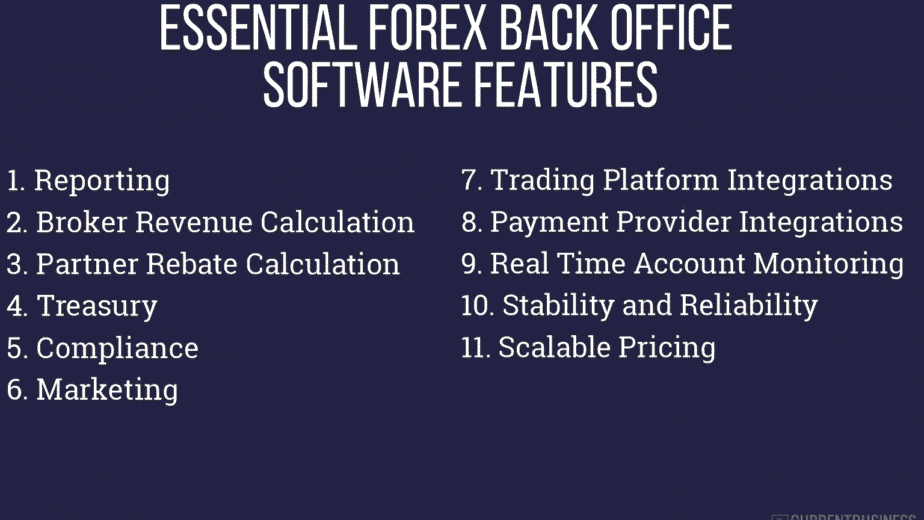
Identify the Tools Your Brokerage Actually Needs
The first step in evaluating a forex back office software platform is determining which internal operational tools your team requires daily. If you currently run an active brokerage, audit your existing setup and categorize your workflows into:
- Essential features your administration and finance teams actively use every day.
- Legacy tools you could eliminate if a modern, automated system replaced them.
- Capabilities you need to support future expansion (e.g., automated KYC, multi-asset reporting).
Once you have this operational breakdown, compare it directly against prospective vendors. This structured approach ensures the software meets your current administrative workload while offering room to scale.
If a vendor’s documentation is unclear regarding specific features, request a live demonstration. Ask direct questions about treasury management, trade reconciliation, and custom reporting. Transparent software providers will demonstrate their system’s exact capabilities clearly.

Choose Dedicated Software Companies Over Brokerage Vendors
When evaluating how to choose a forex back office provider, you will encounter two distinct types of technology vendors:
- Independent software companies that focus exclusively on developing, securing, and maintaining financial technology.
- Brokerage firms selling their internal software to third-party competitors.
For operational security and data privacy, independent technology providers are the safer choice. Dedicated software firms have no commercial incentive to inspect or utilize your client database for their own trading desk advantage. Their business model depends entirely on platform security, uptime, and client trust.
Brokerages that license their internal tools may face inherent conflicts of interest. Choosing a pure-play technology partner ensures your client data, transaction history, and business strategy remain strictly confidential.
Prioritize Industry Expertise and Market Presence
Retail and OTC brokerages operate in a specialized regulatory environment with distinct operational demands. A software vendor that actively engages with the brokerage ecosystem brings far more value than a generic administrative tool.
Look for technology partners who:
- Participate in major financial technology expos (such as iFX EXPO).
- Publish regular operational insights regarding FX brokerage management.
- Update their software features in response to changing regulatory standards across jurisdictions (like FCA, CySEC, or DFSA rules).
Vendors embedded in the FX space build tools designed for real-world brokerage workflows, helping you maintain operational efficiency and compliance.

Select Flexible, Usage-Based Pricing Models
A major factor in how to choose a forex back office vendor is evaluating their pricing structure. Emerging brokerages rarely require enterprise-grade setups with hundreds of custom modules on day one. Look for technology providers that offer transparent pricing structures aligned with your growth stage:
- Pricing options based on active operational modules.
- Tiered pricing scaled to active trading accounts or monthly volume.
Flexible pricing ensures you do not overpay for unused enterprise features during startup phases, while guaranteeing you can unlock advanced treasury and compliance automation as account volume increases.

Leverage Ecosystem Connections and Vendor Referrals
Operating a brokerage requires a connected ecosystem beyond internal administration, including payment gateways, website infrastructure, market data, and liquidity bridging. Established technology providers often maintain broad industry networks to assist client deployments.
During platform evaluations, ask potential vendors about:
- Integrations with global Payment Service Providers (PSPs).
- Direct connections with liquidity providers and bridge technology.
- Referrals for specialized compliance consulting or web development.
Working with a well-connected vendor accelerates deployment and reduces integration friction across your operational stack.

Verify Data Security Standards and System Audit Trails
A crucial factor when learning how to choose a forex back office system is verifying that the vendor operates under recognized international security frameworks.
Ensure the system provides:
- Strict role-based access controls for internal staff members.
- Complete, immutable audit logs for all treasury, document, and account adjustments.
- Data encryption standards for sensitive client documents and financial records according to established KYC compliance guidelines.
Evaluate Customer Support and Service-Level Agreements (SLAs)
Even the most reliable forex CRM system or back office platform requires technical support during platform updates or payment gateway integrations. Reliable vendor support is essential:
- Comprehensive technical documentation, API guides, and admin knowledge bases.
- Responsive support teams backed by clear SLAs for critical technical inquiries.
Dependable vendor support protects ongoing brokerage operations, ensuring administrative tasks and client transactions proceed without interruption.

Banking Relationships and Payment Routing Capabilities
When determining how to choose a forex back office that fits offshore or multi-jurisdictional needs, check their banking integration capabilities. Managing banking relationships and deposit processing in complex environments presents unique operational hurdles.
A qualified back office platform helps solve these challenges by supporting direct integrations with multi-currency payment gateways and regional PSPs. Automated transaction routing allows brokers to process deposits and withdrawals smoothly regardless of corporate structure.
Selecting the Right Technology Partner
Knowing how to choose a forex back office solution comes down to prioritizing provider reliability, system security, and long-term scalability. Your provider’s data security, system architecture, industry experience, and support infrastructure directly impact your daily operations.
A well-designed operational hub streamlines compliance, automates treasury reconciliation, and supports sustained brokerage growth.
At CurrentDesk, we provide an integrated admin back office, CRM, and portal ecosystem engineered specifically for FX and OTC brokerages. Request a demo to see how our platform supports your brokerage operations.